
-
By fuertedevelopers3
-
April 24, 2026
- 0 Comment
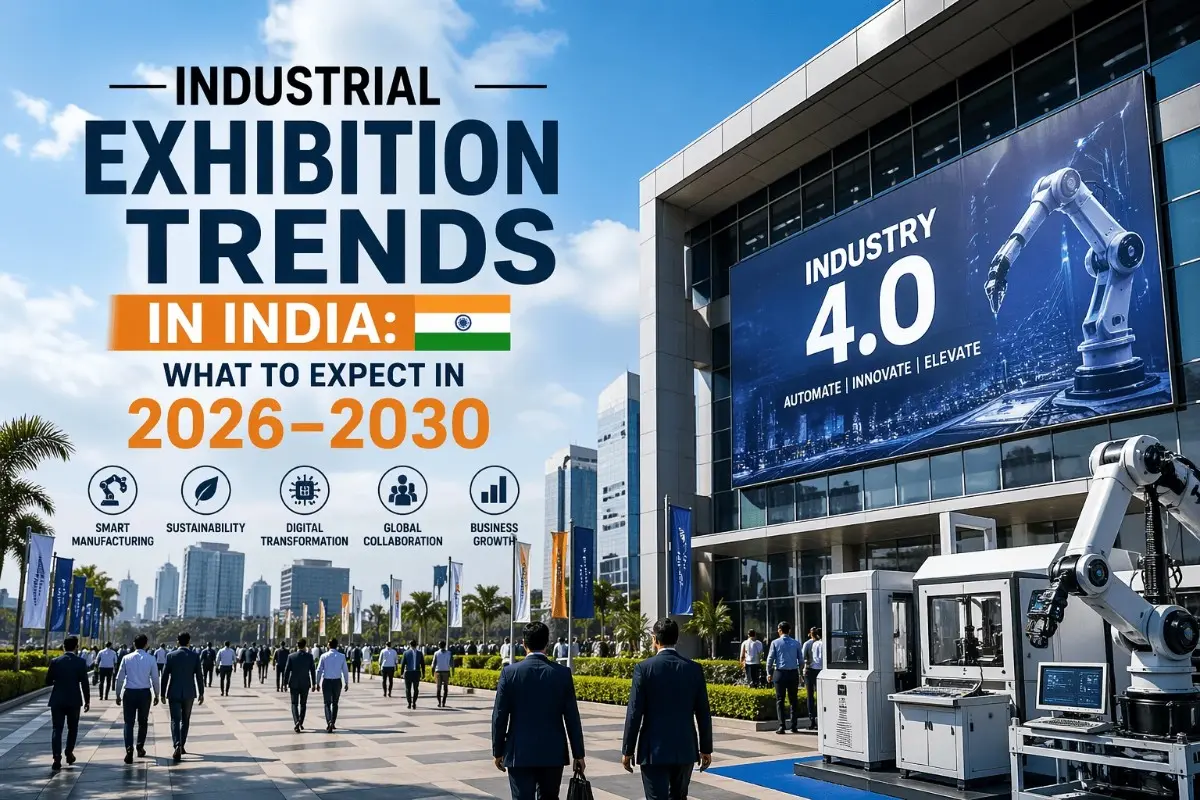
Industrial Exhibition Trends in India: What to Expect in 2026-2030
India’s industrial exhibition landscape is entering a powerful transformation phase. As manufacturing evolves with automation, sustainability, and digital technologies, exhibitions are no longer just product showcases-they are becoming strategic growth platforms for businesses. From 2026 to 2030, industrial expos in India will play a critical role in shaping how industries adopt innovation, build partnerships, and compete globally.
In this blog, we explore the key trends that will define industrial exhibitions in India over the next five years-and what exhibitors, visitors, and organizers should expect.
The Evolution of Industrial Exhibitions in India
Industrial exhibitions in India have grown rapidly over the past decade. In fact, more than 150 industrial exhibitions were organized across the country in 2025 alone, reflecting strong demand for such platforms.
Traditionally, exhibitions were focused on product displays and networking. But today, they are evolving into experience-driven, solution-oriented ecosystems. Events like Engitech Expo and large-scale exhibitions across cities like Pune, Hubballi, and Nagpur highlight how these platforms are becoming central to industrial growth, innovation exchange, and business expansion.
1. Rise of Industry 4.0 and Smart Manufacturing
The biggest trend shaping industrial exhibitions is the rapid adoption of Industry 4.0 technologies.
From AI-powered machinery to IoT-enabled production systems, exhibitions are becoming hubs for next-generation manufacturing solutions. These technologies are no longer experimental-they are now being implemented at scale to improve productivity and efficiency.
What to Expect:
- AI-driven automation and robotics demonstrations
- Smart factories and connected production systems
- Real-time data monitoring and predictive maintenance tools
- Digital twins and simulation-based manufacturing
Industrial exhibitions between 2026-2030 will increasingly focus on real-world applications, not just concepts.
2. Shift from Product Display to Solution-Based Showcases
Modern industrial buyers are not looking for machines-they are looking for solutions to business problems.
Exhibitions are shifting from static displays to live demonstrations and use-case-driven presentations, where visitors can see how a technology improves productivity, reduces downtime, or enhances quality.
Why This Matters:
- Buyers make faster and more confident decisions
- Exhibitors generate high-quality leads
- Conversations become more technical and value-driven
This trend will continue to dominate, making exhibitions more outcome-focused.
3. Integration of Digital and Hybrid Experiences
Digital transformation is reshaping exhibitions themselves.
From QR-based catalogs to virtual tours and AI-powered matchmaking, technology is enhancing how visitors interact with exhibitors.
Key Developments:
- Hybrid exhibitions (physical + virtual participation)
- Mobile apps for scheduling meetings
- Digital lead capture and analytics
- Virtual product demonstrations
By 2030, exhibitions will offer a seamless blend of online and offline experiences, increasing reach and efficiency.
4. Growing International Participation
India is becoming a global manufacturing hub, attracting international companies to participate in industrial exhibitions.
Around 25% of exhibitors in recent years have been international brands targeting the Indian market.
Impact:
- Exposure to global technologies
- Increased competition and innovation
- Opportunities for export and collaboration
Between 2026-2030, expect more global pavilions, cross-border partnerships, and international delegations at Indian exhibitions.
5. Focus on Sustainability and Green Manufacturing
Sustainability is no longer optional—it is a business priority.
Industrial exhibitions are increasingly showcasing energy-efficient machines, eco-friendly materials, and sustainable production methods.
Emerging Trends:
- Green manufacturing technologies
- Renewable energy integration
- Waste reduction and recycling solutions
- Carbon footprint tracking tools
Exhibitions will act as key platforms for promoting responsible industrial growth.
6. Sector-Specific and Niche Exhibitions
Instead of broad, general exhibitions, there is a growing trend toward specialized, industry-focused events.
For example, exhibitions dedicated solely to automation, machine tools, or specific sectors deliver more value by attracting targeted audiences.
Benefits:
- More relevant visitors and exhibitors
- Higher ROI for participants
- Deeper technical discussions
From 2026 onward, niche exhibitions will outperform general trade fairs in terms of business outcomes.
7. Stronger Role of MSMEs and Startups
India’s MSMEs and startups are becoming key contributors to industrial exhibitions.
These companies are bringing innovation, flexibility, and cost-effective solutions to the market. Events are increasingly creating dedicated zones for startups and emerging technologies.
What This Means:
- More innovation on display
- Opportunities for collaboration with large manufacturers
- Increased funding and partnership opportunities
Industrial exhibitions will become launchpads for new ideas and technologies.
8. Knowledge Sharing and Conference Integration
Modern exhibitions are no longer just about stalls-they are knowledge platforms.
Events now include:
- Technical seminars
- Industry panels
- Workshops and training sessions
- Live case studies
For example, recent exhibitions have included conferences on AI in MSMEs, logistics, and global trade connectivity.
This trend will continue, making exhibitions a learning + business hybrid experience.
9. Data-Driven Decision Making
Data is becoming central to exhibition success.
Organizers and exhibitors are increasingly using analytics to:
- Track visitor behavior
- Measure engagement
- Improve ROI
- Optimize booth performance
By 2030, data-driven strategies will define how exhibitions are planned and executed.
10. Increased Focus on ROI and Business Outcomes
Companies today expect measurable results from exhibitions.
They are evaluating participation based on:
- Lead quality
- Conversion rates
- Business deals generated
This is pushing organizers to design exhibitions that deliver real business value, not just footfall.
The Future Outlook: 2026-2030
The next five years will redefine industrial exhibitions in India. These events will become:
- Technology-driven – powered by AI, IoT, and automation
- Experience-focused – centered on live demos and real use cases
- Global platforms – connecting Indian industries with the world
- Sustainability-oriented – promoting green manufacturing
- Business-centric – delivering measurable ROI
Industrial exhibitions will act as bridges between innovation and implementation, helping businesses move from ideas to real-world solutions.
Conclusion
Industrial exhibitions in India are no longer optional-they are essential for staying competitive in a rapidly evolving manufacturing landscape.
From smart manufacturing and digital transformation to sustainability and global collaboration, the trends shaping exhibitions between 2026 and 2030 reflect the future of industry itself.
For businesses, the message is clear:
Those who actively participate in exhibitions-whether as exhibitors or visitors-will gain a significant competitive advantage in the years ahead.